Says it won’t replace filmmakers, laws already protect actors’ names and likenesses
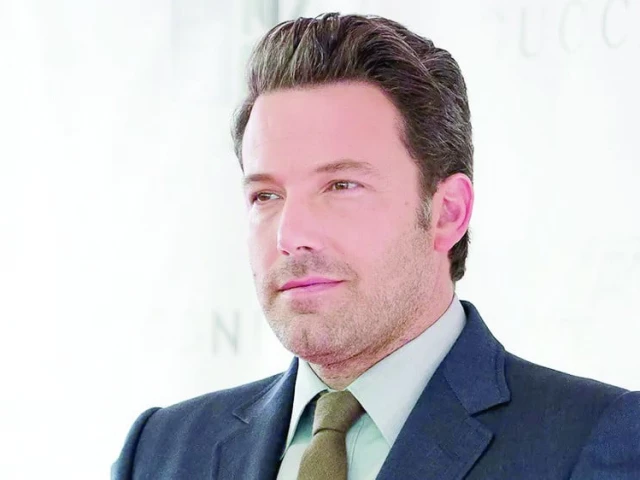
Ben Affleck. Photo: file
Actor and filmmaker Ben Affleck has pushed back against growing fears about artificial intelligence reshaping the film industry.
He argued that the technology is more likely to serve as a practical tool than a replacement for human creativity.
Speaking during an appearance on The Joe Rogan Experience, Affleck said he does not believe AI is currently capable of writing meaningful scripts or creating full films independently. He dismissed claims that AI-generated performers could soon replace actors, calling such predictions unrealistic at the present stage of technological development.
Affleck addressed concerns sparked by the rise of AI-generated virtual performers, including references to Tilly Norwood, a fully digital actress introduced in 2025. While acknowledging the controversy surrounding such projects, he maintained that AI lacks the creative depth required to replicate human storytelling and performance.
Instead, Affleck suggested AI will be used similarly to visual effects technology, helping filmmakers streamline costly or logistically difficult aspects of production. He cited examples such as simulating remote or extreme locations, which could reduce expenses and improve working conditions without eliminating jobs.
The actor also emphasized that protections for artists already exist, particularly regarding the use of an individual’s name, image, and likeness. According to Affleck, current laws, along with unions and guilds, provide safeguards against unauthorized commercial use of an actor’s identity, even as technology advances.
Affleck added that public anxiety around AI is often driven by broader fears of technological disruption and amplified by companies seeking to justify large investments in AI infrastructure. He argued that, historically, technological adoption tends to be gradual rather than sudden or catastrophic.
Overall, Affleck framed AI as an evolving tool that could enhance efficiency in filmmaking, rather than an existential threat to creative professionals.
Affleck gained wider recognition when he and Matt Damon won the Academy Award for Best Original Screenplay for writing Good Will Hunting (1997), which they also starred in. He established himself as a leading man in studio films, including the disaster film Armageddon (1998), the action crime thriller Reindeer Games (2000), the war drama Pearl Harbor (2001), and the thriller The Sum of All Fears (2002). After a career downturn, Affleck made a comeback by portraying George Reeves in the biopic Hollywoodland (2006), winning the Volpi Cup for Best Actor.
His directorial debut, Gone Baby Gone (2007), which he also co-wrote, was well received. He then directed and starred in the crime drama The Town (2010) and the political thriller Argo (2012), both of which were critical and commercial successes. For the latter, Affleck won the BAFTA Award for Best Director, and the BAFTA and Academy Award for Best Picture. Affleck then starred in the psychological thriller Gone Girl (2014) and played the superhero Batman in the DC Extended Universe (2016-2023). He starred in the thriller The Accountant (2016) and the sports drama The Way Back (2020). Affleck had supporting roles in the dramas The Last Duel (2021), The Tender Bar (2021) and Air (2023), the third of which he also directed.
Affleck is the co-founder of the Eastern Congo Initiative, a grantmaking and advocacy-based nonprofit organization. He is a supporter of the Democratic Party. Affleck and Damon are co-owners of the production company Artists Equity and were also co-owners of Pearl Street Films.