Last Updated:
Shares of oil marketing companies (OMCs) — BPCL, HPCL and IOC — may come under pressure on Monday amid the ongoing west asia conflict




Oil Stocks Today
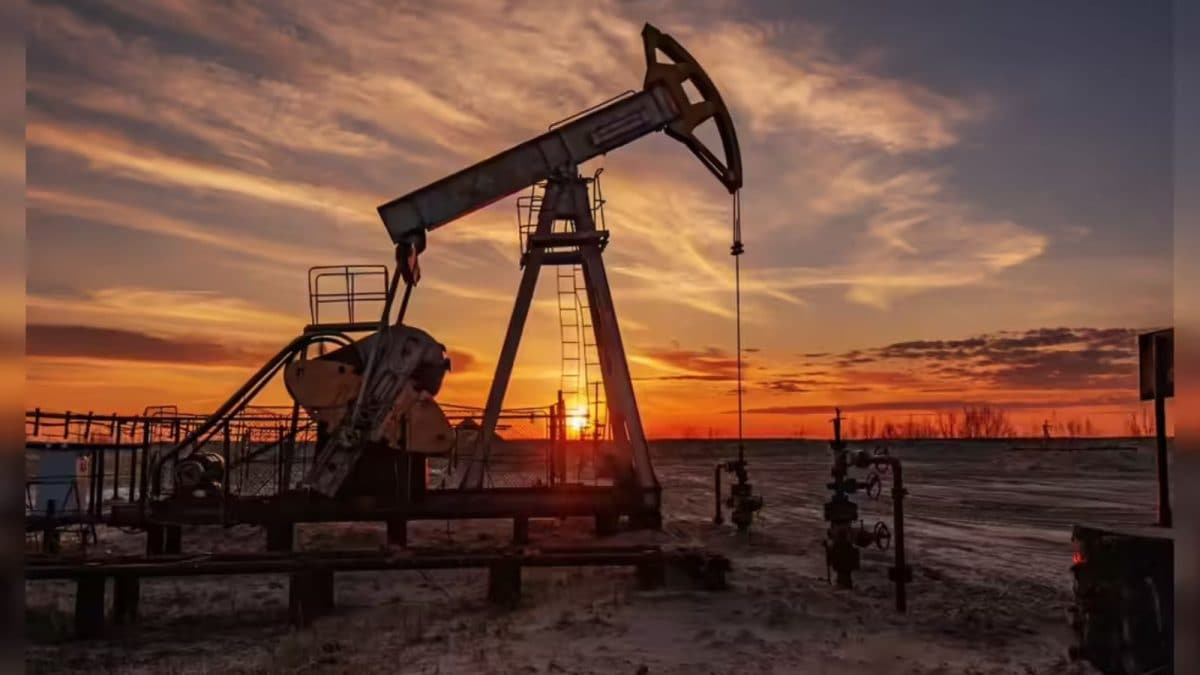
Shares of ONGC, Oil India soared as much as 5% on Monday after crude prices surged as much as 12% as Iran and Israel intensified attacks in the Middle East, damaging tankers and disrupting shipments from the key oil-producing region.
ONGC shares rose 5% to their day’s high of Rs 293 on the BSE, while Oil India rose 4.5% to Rs 505.50 in the opening trade. A rise in crude prices is a positive development for upstream oil and gas companies (producers like ONGC and Oil India). Higher prices directly increase their revenue per barrel, possibly lifting profit margins, and can lead to increased capital expenditure on exploration.
Emkay Global said OMCs may find it difficult to pass on higher input costs to consumers. The brokerage added that upstream stocks like ONGC and Oil India offer better protection in the current scenario, although part of the gains could be offset by potential windfall taxes.
The joint US-Israel strikes reportedly killed Iran’s Supreme Leader Ayatollah Ali Khamenei along with several senior officials from the IRGC, intelligence and national security establishments. Iran has since responded with missile and drone attacks on US bases in the UAE, Kuwait and Bahrain, shifting the situation from a looming threat to an active military confrontation.
JM Financial, in its scenario analysis, said any disruption in the Strait of Hormuz could push crude prices beyond $90 per barrel, while a broader regional conflict may drive prices above $100 per barrel.
For India, the implications are significant. Every $1 increase in crude prices raises the country’s annual import bill by about $2 billion, straining the trade balance. “Upstream energy and defence may see relative support, while oil-sensitive sectors such as OMCs, paints, tyres, aviation and chemicals could face margin pressure. Crude remains the key macro variable for Indian equities under the current escalation scenario,” the brokerage noted.
Equirus Securities said markets do not price wars in a linear fashion. If tensions escalate to the point of threatening the Strait of Hormuz, the risk premium could become structural rather than incremental.
“Even partial disruption risk could embed a $20–$40 per barrel geopolitical premium, reopening a pathway toward $95–$110+, well beyond the mechanical impact of Iran’s barrels alone,” it said in a note.
 Click here to add News18 as your preferred news source on Google.
Follow News18 on Google. Join the fun, play games on News18. Stay updated with all the latest business news, including market trends, stock updates, tax, IPO, banking finance, real estate, savings and investments. To Get in-depth analysis, expert opinions, and real-time updates. Also Download the News18 App to stay updated.
March 02, 2026, 08:37 IST
Read More